
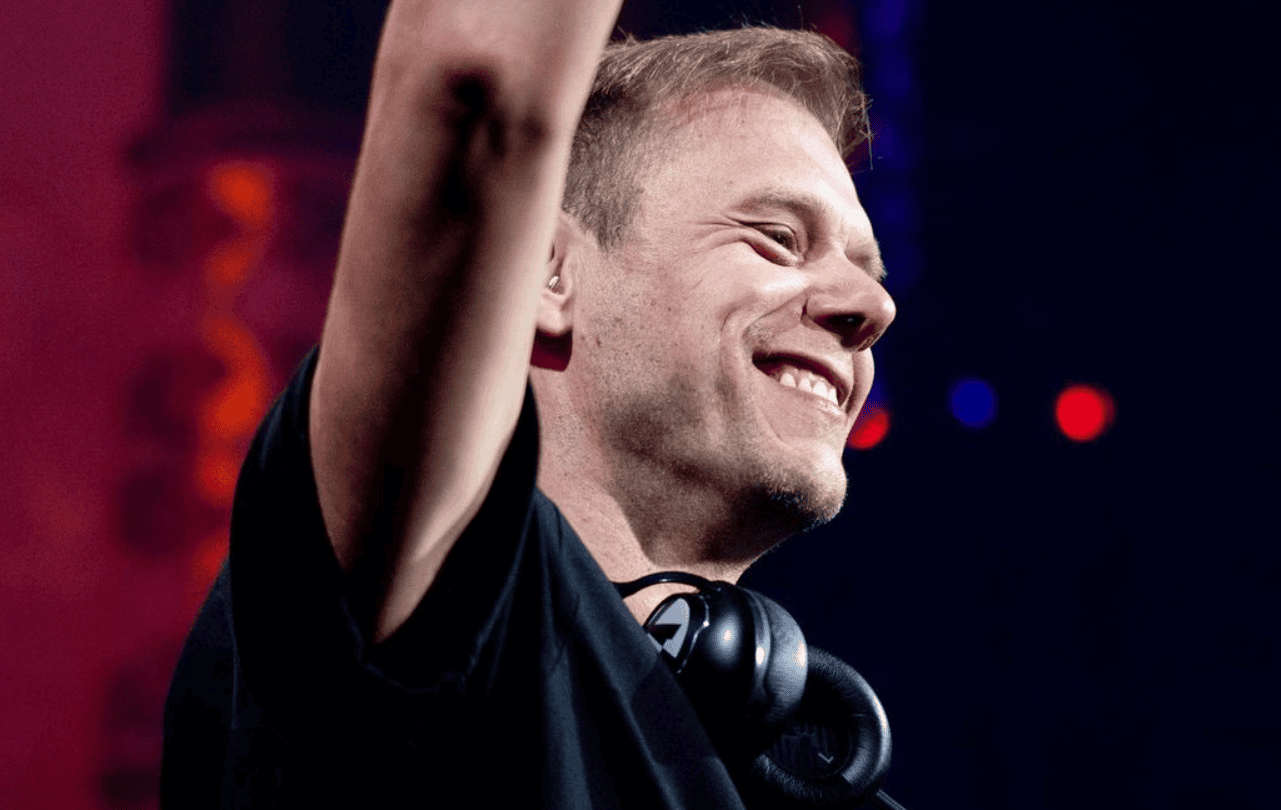
Armin van Buuren has offered a rare and deeply personal look into his life, career and mental health during a revealing conversation with MistaJam for Capital Dance’s The Making of a DJ. From his childhood fascination with electronic music and the unexpected success of his classic track Blue Fear to the creation of Armada Music and the pressures of international DJ life, the Dutch trance superstar reflects on the experiences that shaped his journey.
The interview goes beyond the usual discussion of music production, festival performances and career milestones. Armin also addresses the mental health challenges affecting the electronic music industry, sharing his personal experiences with depression, anxiety and addiction, as well as the steps he took to improve his well-being.
Armin van Buuren Reveals How His Love for Electronic Music Began
Long before becoming one of the world’s most recognizable DJs, Armin van Buuren grew up in a household where music was an important part of everyday life.
His father, a general practitioner, regularly played music at high volume as a way of unwinding after demanding days at work. His musical interests included classical compositions and pioneering electronic artists such as Vangelis, Klaus Schulze and Jean-Michel Jarre.
Meanwhile, Armin’s brother developed a passion for guitar-driven music, particularly the work of Joe Satriani and Steve Vai. He eventually became a guitar teacher at the conservatory in Amsterdam.
Growing up surrounded by these different musical influences helped Armin discover his own direction. While his family explored various genres, he became increasingly fascinated by electronic sounds and the creative possibilities of synthesizers.
However, music was only one part of his early development. Another important influence came from an unexpected technological discovery.
The Computer That Helped Shape His Musical Future
During the mid-1980s, Armin’s mother, who worked as a journalist, won a computer in a promotional competition organized by a newly established local company.
Armin was around eight or nine years old at the time. Rather than simply using the machine for entertainment, he began teaching himself BASIC programming.
That early experience introduced him to the fundamentals of computer technology and logical thinking. Looking back, he describes learning to program as absolutely instrumental to his development.
The connection between programming and electronic music would eventually become particularly valuable. Understanding how computers operate gave him an early appreciation of the relationship between technology, creativity and sound design.
From Bedroom Experiments to the Breakthrough Success of ‘Blue Fear’
Although Armin dreamed of becoming a professional DJ, the electronic music industry looked very different during his teenage years.
By the late 1980s, dance music remained a relatively niche movement. Large international electronic music festivals such as Tomorrowland and Ultra were not part of the landscape, and building a sustainable career as a DJ was far from guaranteed.
At just 18, Armin’s ambition was much more modest. He dreamed of playing at Escape, a nightclub on Amsterdam’s Rembrandtplein with a capacity of approximately 600 to 700 people.
At the time, people frequently questioned whether electronic dance music would last. Some even encouraged him to pick up a guitar and pursue what they considered more traditional musicianship.
Nevertheless, Armin continued experimenting in his parents’ bedroom, creating unusual sounds and developing his own musical identity.
That creative freedom eventually produced one of the most important tracks of his early career: ‘Blue Fear’.
How ‘Blue Fear’ Changed Everything
Before the track’s success, Armin had submitted approximately 60 productions to Cyber Records. The label’s owner agreed to release only one of them, ‘X Marks The Spot’.
However, the release still needed a B-side.
With no particular commercial expectations or pressure, Armin returned home and created ‘Blue Fear’ during a single Friday evening.
What happened next exceeded his expectations.
Legendary DJs Sasha and John Digweed began supporting the track, introducing it to audiences through their sets. Armin also recalls hearing that it had been played inside a stadium during a Manchester United match.
The track gained further recognition when Sasha and John Digweed included it on their influential Northern Exposure compilation.
Its success generated Armin’s first significant royalty payment. He remembers showing the statement to his father, who initially believed the amount was a banking mistake.
Rather than spending the money, Armin reinvested everything into building a larger music studio.
The experience helped demonstrate that his passion could become a genuine professional career.
Why Armin van Buuren Founded Armada Music
Another major chapter in Armin’s career began with frustration.
At the time, he was working with a record label that primarily wanted to release his own productions. However, through his growing involvement with A State of Trance, he was regularly discovering music from talented producers whose tracks were being rejected.
Armin wanted to create opportunities for those artists instead of limiting the label’s output to his own productions.
He therefore joined forces with Maykel Piron, who was working at Warner Music, and his agent David Lewis to establish Armada Music.
The label quickly gained momentum, with one of its early releases proving particularly important.
In 2003, Motorcycle’s ‘As The Rush Comes’ became a major success, selling approximately 15,000 vinyl copies. The revenue generated by the release provided the initial financial foundation for Armada’s development.
Today, Armada represents an important part of Armin’s wider contribution to electronic music, extending his influence beyond his own productions and performances.
As he explained during the interview, sharing music is central to the experience of DJing. Discovering a track you love naturally creates the desire to play it again and introduce it to friends.
That philosophy also helps explain why he continues supporting artists from across the electronic music community.
A State of Trance: From a Yellow Walkman to a Global Radio Institution
Armin’s internationally recognized radio show, A State of Trance, also began with a childhood ambition.
As a teenager, he was too young to enter Amsterdam’s Roxy nightclub. Instead, he recorded British radio shows featuring influential DJs such as Sasha, John Digweed, Carl Cox and Judge Jules onto 90-minute cassette tapes.
He would then listen to those recordings on a yellow Walkman during his 10-kilometre bicycle journey to school.
Even at that age, he imagined hosting his own electronic music radio program one day.
That dream became reality on June 1, 2001, when the first episode of A State of Trance was broadcast.
Building a Global Trance Community
Armin insists that the show’s success was never the result of a carefully designed business strategy.
In its early days, listeners gathered in an ICQ chat room to discuss the music and share their reactions while the broadcasts were happening.
Those conversations helped Armin identify which records resonated with audiences before introducing them into his club sets, particularly in the United Kingdom.
The weekly two-hour trance format was initially considered unusual by some industry colleagues. However, Armin remained committed to the concept.
By the time the interview with MistaJam was recorded, A State of Trance had celebrated its 1,300th episode.
Today, Armin sees the program as a responsibility to the wider electronic music scene. This is also why its playlists feature productions from artists beyond the Armada Music roster.
Armin van Buuren Speaks Honestly About Mental Health in Electronic Music
Perhaps the most significant part of the conversation concerns the psychological pressures associated with being a professional DJ.
Armin addressed the difficult realities behind the glamorous image of international electronic music, highlighting depression, anxiety and addiction as serious challenges within the industry.
He also referenced the passing of Avicii, an event that has prompted important conversations about the pressures experienced by artists working at the highest levels of electronic music.
Importantly, Armin acknowledged that these struggles are not limited to other musicians, openly revealing that he has faced similar difficulties himself.
During Amsterdam Dance Event (ADE), he brought together 25 DJs for a dedicated discussion about mental health, creating an opportunity for artists to address issues that can often remain hidden behind the excitement of touring and performing.
The Changes That Helped Armin Rebuild His Well-Being
Armin explained that several personal decisions helped him navigate his own challenges.
Among the changes he discussed were:
- Quitting alcohol completely: Removing alcohol became an important part of his personal journey toward better well-being.
- Starting meditation: Meditation helped him introduce a more mindful approach to everyday life.
- Going into therapy: Professional support gave him an opportunity to work through personal difficulties.
- Accepting his musical identity: He recognized the importance of embracing who he really was instead of constantly comparing himself with other DJs.
That final realization was particularly meaningful. Armin explained that he had spent too much time wanting to become another DJ rather than fully accepting his own artistic identity.
His message highlights an important issue within electronic music: professional success does not automatically guarantee personal happiness.
A More Personal Side of One of Trance Music’s Biggest Names
Armin van Buuren’s conversation with MistaJam offers more than a retrospective look at an extraordinary career. It reveals the combination of curiosity, persistence, experimentation and personal growth that helped him become a defining figure in electronic music.
From creating ‘Blue Fear’ in a single evening to building Armada Music and transforming A State of Trance into an internationally recognized platform, his story demonstrates the importance of following creative instincts.
However, his openness about mental health may ultimately be the interview’s most meaningful contribution.
By discussing his own experiences and encouraging conversations among fellow DJs, Armin is helping challenge the idea that artists must always appear strong, successful and unaffected by pressure.
The interview also follows his recent conversation with Zane Lowe, offering fans another opportunity to discover the person behind the global DJ career.
For anyone interested in the history of trance, the evolution of electronic music or the realities of life behind the decks, this is a conversation worth watching.






Comments are closed.