
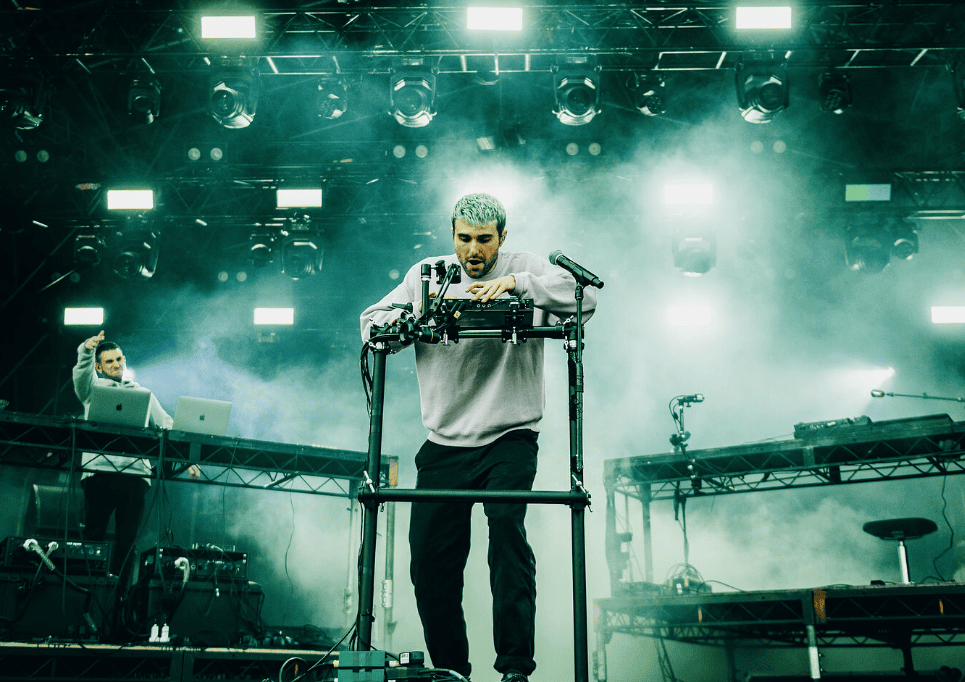
At a time when artificial intelligence can generate a melody in seconds, imitate a voice with unsettling precision and produce entire musical ideas from a handful of words, Fred again.. is making an argument for something technology cannot easily quantify: the value of struggling to create.
The British producer recently resurfaced personal notes he had written nearly a year earlier, sharing them through Instagram Stories and reflecting on his unease about the ways generative AI could reshape the world. His position, however, is more nuanced than a simple rejection of new technology.
For Fred, the important question is not whether AI can make music.
It is whether making music still matters when the difficult, frustrating, deeply personal part of the process is handed over to something else.
His answer is clear.
The Process Is the Point
Fred again.. has built much of his artistic identity around intimacy. His music often feels less like a traditional studio construction and more like a collection of memories, conversations, field recordings and emotional fragments transformed into electronic music.
That makes his resistance to generative AI particularly revealing.
He explained that he has never felt tempted to use AI-powered music software because the act of building something himself is inseparable from why he creates in the first place. The hours spent searching for the right sound, changing an arrangement, abandoning an idea and returning to it later are not obstacles standing between him and the finished song.
They are the experience.
“I place so so so much of my identity in that process,” Fred wrote, explaining that creating music has become a kind of meditation and daily compass.
That distinction is becoming increasingly important as AI tools promise to remove more and more friction from creative work.
The assumption behind many generative tools is that less effort can mean greater efficiency. Fred’s perspective turns that logic around. For him, the effort is precisely where the meaning lives.
Why the Struggle Matters
There is something almost old-fashioned about Fred’s argument.
The romantic idea of the artist spending years chasing an image that exists only in their imagination has existed for centuries. But electronic music has always had a complicated relationship with technology. Synthesizers, samplers, drum machines, sequencers and computers have repeatedly transformed how music can be made.
The difference with generative AI is that the technology increasingly moves beyond providing tools and into participating in the creative decision itself.
That changes the relationship between artist and machine.
A synthesizer can give a producer a new sound. A sampler can allow an old recording to become something entirely different. A DAW can make experimentation faster. The creative decisions still belong to the person making the music.
Generative AI introduces a different possibility: the machine can propose the musical material itself.
For Fred, that is precisely where the problem begins.
He isn’t arguing that technology will destroy music. Instead, he is protecting the part of music-making that technology is designed to make easier.
The Beauty of Getting It Wrong
One of the most interesting elements of Fred’s comments is his embrace of imperfection.
He describes the creative process as a “clumsy dedicated tumbling towards an idea,” capturing something that is difficult to reproduce through automation. Artists rarely know exactly where a song is going when they begin making it.
A mistake becomes a texture.
A bad take becomes a hook.
An accidental distortion becomes the defining sound.
A completely abandoned idea might eventually return months later in another form.
That unpredictability is part of the creative relationship between an artist and their work.
Generative systems, by contrast, are built around producing outcomes. They can introduce variation and surprise, but the experience is fundamentally different because the machine does not need to live through the uncertainty surrounding the result.
For Fred, that uncertainty is not wasted time.
It is the work.
A Different Argument in the AI Debate
The conversation surrounding AI-generated music has largely centred on copyright, consent, ownership, training data and economics. Those questions remain among the industry’s most contentious issues as artists and rights holders attempt to understand how existing frameworks apply to rapidly evolving technology.
Fred’s perspective approaches the subject from somewhere more personal.
What happens to the artist if the thing they love most about their profession becomes optional?
That is a much harder question to answer with legislation or licensing agreements.
His comments suggest that creativity has value before a song becomes a product. Before streaming numbers, playlists, charts, royalties or social media clips, there is simply someone sitting with an idea and trying to make it real.
That process may produce a masterpiece.
It may produce something nobody hears.
It may produce dozens of failed versions before the right one appears.
The value, in Fred’s view, exists regardless.
Skrillex Sees Something Similar
Fred’s comments also arrive during a broader moment of reflection among electronic music’s biggest artists.
Skrillex recently spoke about AI during his first formal interview in more than a decade, focusing on a different but connected aspect of human-made music.
Reflecting on records by artists such as Justice, Daft Punk and Metallica, Skrillex pointed to the feeling that can emerge when music seems to communicate something deeply personal between artist and listener.
The technology used to create the music matters less than the sense that there is a person on the other side of it.
That emotional connection is difficult to define technically. It is not a frequency, a tempo or a production technique. It is the feeling of recognition between two human beings who may never meet.
And that may ultimately be the most difficult element of music for generative AI to replicate.
Not sound.
Meaning.
Fred Again.. at the Centre of a Bigger Conversation
The timing of Fred’s comments is particularly interesting because his own career demonstrates how deeply technology and music can coexist.
His production style has embraced digital tools, sampling, vocal manipulation and unconventional recording techniques. His rise has also been inseparable from online culture, where intimate studio moments and fragments of everyday life can become part of an artist’s public language.
He is hardly an artist arguing for a return to a pre-digital world.
Instead, his position draws a line between using technology to expand human creativity and asking technology to replace part of the creative experience.
That distinction could become increasingly important as generative tools become more sophisticated.
The question facing musicians may not ultimately be whether AI should exist. It will be where they want it to sit within the creative process.
For Fred, the answer appears to be deliberately far away from the part he considers most sacred.
A Future That Still Needs the Artist
Fred again.. is entering this conversation at an interesting moment in his own career. He has contributed music to the long-awaited GTA 6, including “Sexy Magic” with CA7RIEL & Paco Amoroso, PinkPantheress and Etienne de Crécy, while reports have also linked him with a possible headline appearance at Coachella in 2027 alongside Tame Impala and Dua Lipa.
His career is continuing to move toward increasingly enormous cultural platforms.
Yet his argument is ultimately about something much smaller.
A person.
A computer.
A half-finished project.
And the stubborn decision to keep working on it.
That may be the part of the AI debate worth remembering. Music has never been valuable simply because humans possess the technical ability to produce sound. It is valuable because humans attach memory, frustration, identity, vulnerability and intention to that sound.
Generative AI may become extraordinarily good at producing music. The technology will undoubtedly continue to change the industry around it.
But Fred again.. is defending something that exists before all of that: the strange privilege of spending years trying to make something that only exists in your head, and discovering who you are somewhere along the way.
In an age increasingly obsessed with making creativity faster, his message is almost radical in its simplicity.
Maybe the struggle was never the part we needed to eliminate.
Maybe it was the magic.






Comments are closed.