
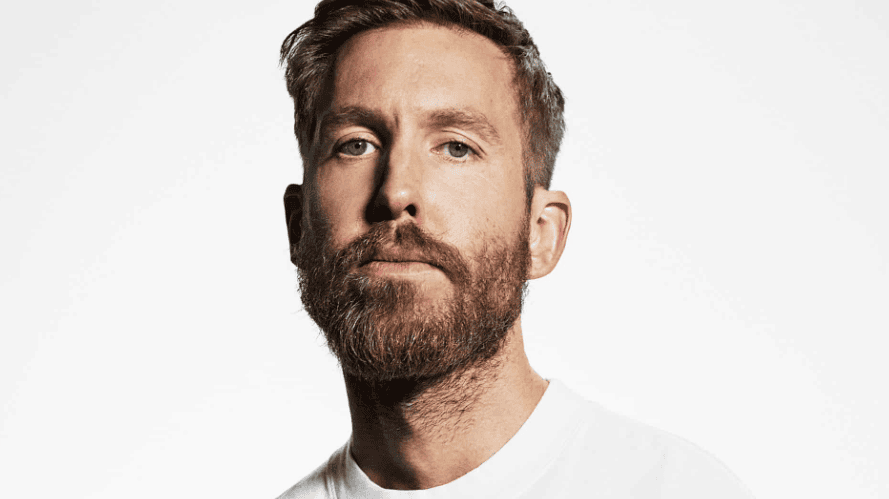
Some songs never really leave the dance floor. They simply wait for the right moment to return.
Calvin Harris has sparked speculation across the United States after a series of striking digital billboards brought one of his most recognisable lyrics back into public view. From New York’s Times Square to Seattle, Chicago, San Diego and Houston, the campaign carries a simple message inspired by his 2011 hit “Feel So Close”: “NEW YORK, I FEEL SO CLOSE TO YOU RIGHT NOW.”
Each billboard adapts the lyric to its location, turning a familiar line into a city-wide teaser. There is no confirmed announcement attached to the campaign yet, and Harris has remained quiet about what it might be leading towards.
That silence has only added to the intrigue.
For an artist whose catalogue has helped define modern commercial dance music, revisiting Feel So Close is a particularly interesting choice. The track is not simply a nostalgic favourite. It represents a pivotal moment in Harris’s evolution, when the producer behind the decks stepped forward to become the voice of his own music.
The Return of a Defining Dance Anthem
Released in August 2011 as the second single from his third studio album, 18 Months, “Feel So Close” marked a significant chapter in Harris’s career.
At the time, he had already established himself as a producer capable of moving between electronic music and pop. But the track placed his own vocals at the centre of a direct, emotionally accessible dance record, built around an instantly recognisable hook and a production that felt equally at home on radio, at festivals and in clubs.
Its success reflected that crossover appeal. The single reached No. 2 on the UK Singles Chart, peaked at No. 12 on the Billboard Hot 100 and topped Billboard’s Dance Airplay chart. It has since earned triple-platinum certification in the United States.
Yet the song’s staying power cannot be explained by chart positions alone.
Its appeal lies in the simplicity of its emotional premise. The lyrics capture the feeling of being completely connected to another person, while the production gives that intimacy a larger, almost euphoric scale.
It is a song designed for collective recognition: the kind of record that can transform a crowd of strangers into thousands of people singing the same words.
More than a decade later, that emotional shorthand remains instantly recognisable.
Five Cities, One Message
The campaign’s most intriguing detail is its geographical reach.
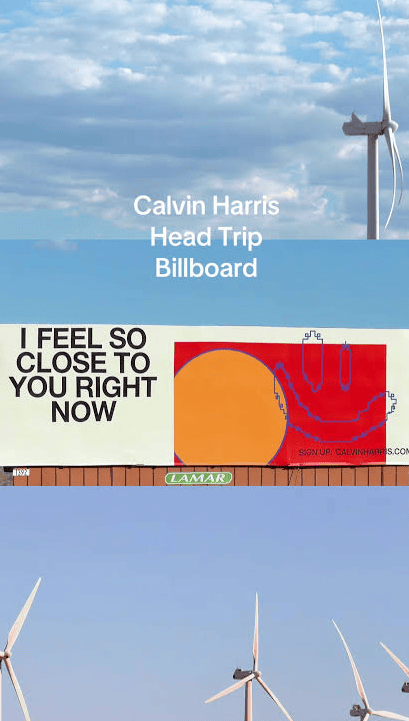
Rather than appearing in one location, the billboards have surfaced across five major US cities, each using the same lyrical concept while addressing a different audience.
Times Square provides the most immediately visible backdrop. Its enormous digital displays are already synonymous with global advertising, entertainment launches and cultural announcements. Placing a lyric from Feel So Close in that environment gives the campaign the scale of a major event without revealing what the event might be.
The other locations suggest a broader strategy rather than an isolated promotional stunt.
Still, the central question remains unanswered: is Harris revisiting an iconic moment in his catalogue, preparing a new project, announcing performances or building towards something else entirely?
At present, none of those possibilities has been confirmed.
The campaign’s effectiveness lies precisely in that gap between recognition and explanation. Fans know the song, understand the reference and are left to speculate about the next move.
Why Feel So Close Still Matters
Electronic music has spent years cycling through revivals, from renewed interest in classic house sounds to the return of festival-era anthems and familiar dance-pop formulas.
But some records occupy a different category. They become part of the cultural memory surrounding a particular era of nightlife.
“Feel So Close” belongs to that group.
It arrived during a period when electronic producers were increasingly crossing into mainstream pop while retaining a clear connection to dance-floor culture. Harris would go on to build an extraordinary catalogue of global hits, but the 2011 single remains one of the records most closely associated with his own voice and artistic identity.
Its continued recognition also demonstrates something important about dance music’s relationship with nostalgia.
A great electronic anthem does not necessarily become less powerful as it ages. In the right setting, the familiarity can intensify the experience. A single lyric or opening sound can bring back a festival, a night out or a particular moment in someone’s life.
That emotional connection is difficult to manufacture through marketing alone.
The billboard campaign, however, knows exactly where to find it.
Calvin Harris at a New Career Peak
The timing is notable given Harris’s recent activity.
The Scottish producer has spent 2026 maintaining a major presence across the global dance circuit, including a double residency at Ushuaïa Ibiza, a homecoming performance in Glasgow broadcast by the BBC and a closing set at Tomorrowland.
He has also released “Satisfy” with Jazzy, while continuing to expand his live ambitions beyond his established European audience.
In September, Harris reportedly performed a DJ set in São Paulo attended by an estimated 1.6 million people, an event associated with a Guinness World Record. He has also announced his first Australian headline tour for February 2027, with reported sales reaching 330,000 tickets.
Against that backdrop, a campaign centred on one of his defining records feels strategically interesting.
Harris does not need to introduce himself to a new generation of dance music fans. His catalogue already provides a bridge between different audiences, from listeners who discovered him through his early solo productions to those who know him through his later collaborations and festival appearances.
The unanswered question is whether this campaign will simply celebrate that legacy or signal a new chapter.
The Art of the Tease
In an era of constant announcements, snippets and release schedules, withholding information can be a powerful promotional tool.
The billboards offer just enough to activate recognition without providing a complete narrative. The lyric is familiar, the cities are identifiable and the association with Harris is clear, but the purpose remains open.
That makes the campaign feel less like a conventional advertisement and more like an invitation to participate in a mystery.
Fans are doing what modern music campaigns increasingly encourage them to do: share images, compare sightings and speculate about what comes next.
The approach also places the music itself at the centre. There is no need for a lengthy explanation when a single line from a decade-old hit can communicate the entire emotional identity of the campaign.
Whether the next announcement involves new music, a live project or something else, the choice of Feel So Close gives the teaser a strong foundation.
It is a reminder that Harris’s catalogue contains more than successful singles. It contains songs that audiences already associate with their own memories.
What Comes Next?
For now, the billboards remain a question without an official answer.
Harris has not confirmed what the campaign is building towards, and it would be premature to treat the appearances as evidence of a new release or a specific tour announcement.
But the choice to bring Feel So Close back into the public eye is compelling in itself.
The song captured a particular kind of connection when it first arrived in 2011. Today, its return through a series of high-profile urban displays taps into the same feeling from a different angle: the power of a familiar melody to connect an artist with audiences across cities and generations.
Perhaps the campaign will lead to something entirely new. Perhaps it will revisit a defining moment from Harris’s past.
Until he reveals the next move, the mystery remains part of the experience.
And that is the cleverness of it. Calvin Harris has taken a lyric millions already know and turned it into a question the dance music world is waiting to have answered.




Comments are closed.