
Long before he became one of techno’s most respected global icons, Carl Cox faced a life-changing decision that could have taken his future in a completely different direction.
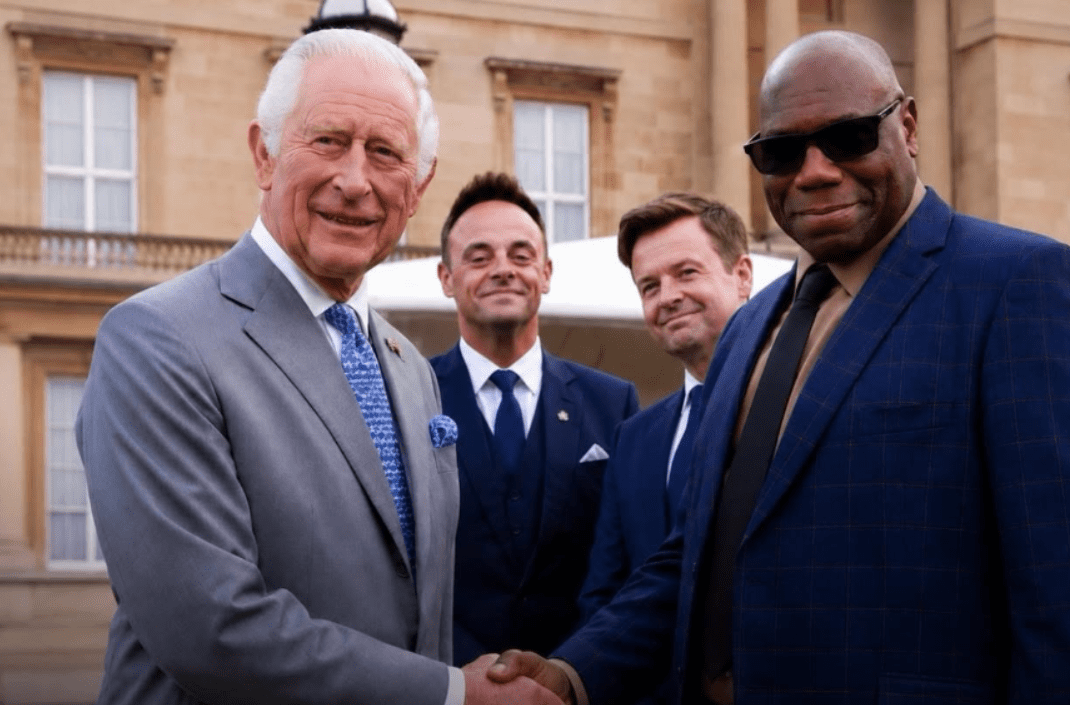
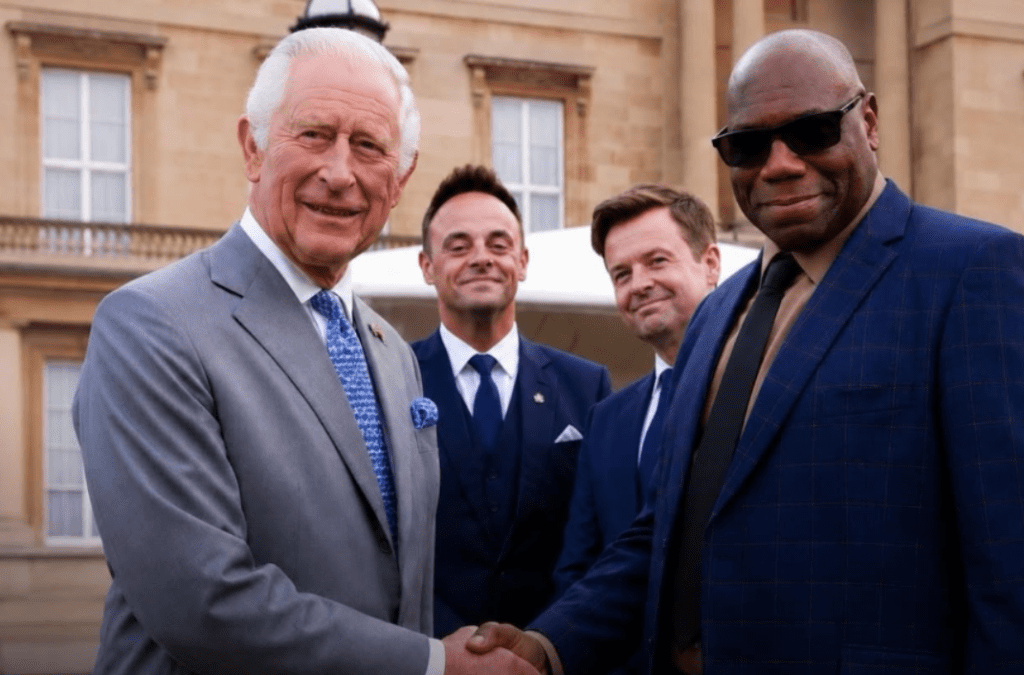
This week, the legendary DJ and producer stood inside Buckingham Palace alongside King Charles III during the 50th anniversary celebration of The King’s Trust, the charitable organization formerly known as The Prince’s Trust. For Cox, the visit was far more than a ceremonial appearance. It marked a deeply personal full circle moment tied directly to the beginning of his extraordinary music career.
Decades ago, the trust awarded the aspiring young DJ £1,000 to help purchase his first DJ equipment. That small investment ultimately helped launch one of the most influential careers in electronic music history.
Today, Carl Cox is regarded as a pioneer of rave culture, techno, and modern DJ performance. Yet his story serves as a reminder that behind every global success story is often a single opportunity that changed everything.
Carl Cox and King Charles Reunion Highlights an Incredible Career Journey
The emotional reunion between Carl Cox and King Charles quickly captured attention across both the music world and British media. Sharing photos from the event on social media, Cox reflected on the difficult choice he faced as a young man trying to build a future.
“At 24, The Prince’s Trust gave me £1,000 which I used to buy my first DJ equipment,” Cox wrote online.
At the time, he had two possible paths in front of him. One offered financial security through scaffolding work earning roughly £500 per week. The other involved taking a huge risk as a self-employed DJ making just £60 per week.
He chose music.
That decision would eventually help shape dance music culture across generations.
How The King’s Trust Helped Launch Carl Cox’s Career
The King’s Trust was founded to help young people overcome barriers to employment, education, and entrepreneurship. Over the decades, the organization has supported thousands of aspiring business owners, creatives, and professionals throughout the United Kingdom.
For Carl Cox, the trust’s support arrived at a critical turning point. Access to professional DJ equipment was far less attainable during the early years of club culture than it is today. Unlike modern digital setups, DJ technology during the 1980s required significant financial investment.
The £1,000 grant gave Cox the tools he needed to fully commit to his passion and begin building a career in music.
Looking back now, that investment appears remarkably significant. Few could have predicted that the young DJ receiving financial support would later become one of electronic music’s most recognizable ambassadors worldwide.
From South London Clubs to Global Techno Icon
Born in Oldham and raised in South London, Carl Cox emerged during the explosive rise of acid house and rave culture in the late 1980s and early 1990s.
His technical skill behind the decks quickly separated him from many of his contemporaries. Cox became known for his high-energy mixing style, seamless transitions, and unmatched ability to command massive crowds for hours at a time.
As dance music evolved globally, Cox remained at the forefront of multiple eras within club culture. He successfully navigated changing musical trends while maintaining credibility within underground electronic scenes.
Over time, he transformed from rave pioneer into a defining figure of modern techno.
Carl Cox Helped Shape Modern DJ Culture
Few DJs have influenced global club culture as consistently as Carl Cox. Across four decades, he has helped define what it means to be a world-class electronic music performer.
His impact extends far beyond music production alone.
Cox played a major role in elevating the art of DJing itself, particularly during an era when electronic artists were still fighting for mainstream respect. Through marathon club sets, festival appearances, and international tours, he demonstrated that DJs could become headline attractions capable of filling arenas and shaping global youth culture.
His legendary Ibiza residencies also became central to his legacy. For years, Carl Cox’s summer performances on the island represented essential experiences for dance music fans traveling from around the world.
Even today, younger generations of DJs frequently cite him as one of their biggest inspirations.
A Symbolic Moment for Dance Music
The Buckingham Palace meeting carried symbolic importance not just for Carl Cox personally, but also for electronic music culture more broadly.
Dance music once existed largely outside mainstream cultural institutions. During its early years, rave culture often faced criticism, misunderstanding, and resistance from traditional establishments.
Seeing one of techno’s most influential pioneers honored at Buckingham Palace reflects how dramatically perceptions of electronic music have changed over time.
What was once viewed as underground counterculture is now recognized as a major global artistic movement with enormous cultural and economic influence.
The moment also highlighted the growing acknowledgment of dance music’s contribution to British culture specifically. The UK played a crucial role in shaping rave, jungle, house, garage, and techno movements that eventually spread worldwide.
Artists like Carl Cox helped lead that transformation.
Why Carl Cox’s Story Still Resonates Today
Part of what makes Carl Cox’s journey so compelling is how relatable it remains for aspiring artists today.
Many musicians still face the same difficult questions Cox encountered decades ago:
- Should they pursue stable careers or chase creative ambitions?
- Is financial uncertainty worth the possibility of artistic fulfillment?
- Can passion realistically become a sustainable profession?
Cox’s story does not present success as easy or guaranteed. Instead, it illustrates the importance of opportunity, persistence, and belief in one’s craft.
Importantly, it also demonstrates the long-term value of organizations that invest in emerging talent and youth development programs.
Without that early support from The King’s Trust, electronic music history may have unfolded very differently.
Carl Cox Continues to Influence the Global Electronic Scene
Despite his legendary status, Carl Cox remains deeply active within contemporary dance music culture.
He continues to headline major festivals, perform marathon techno sets, and mentor younger artists entering the industry. His influence spans generations, connecting the original rave era with today’s rapidly evolving electronic music landscape.
Recent projects, including his ongoing residency at UNVRS, show that Cox still approaches club culture with the same enthusiasm and energy that first defined his rise decades ago.
That enduring passion is one reason he remains universally respected across nearly every corner of electronic music.
Conclusion
The meeting between Carl Cox and King Charles was more than a photo opportunity. It was a powerful reminder of how one small act of support can completely transform a person’s future.
From receiving a £1,000 grant as a struggling young DJ to becoming one of techno’s most influential global figures, Carl Cox’s journey reflects the transformative power of opportunity, creativity, and perseverance.
As dance music continues to evolve, stories like this remain important because they highlight the human experiences behind the culture. For Carl Cox, returning to Buckingham Palace decades after The King’s Trust helped launch his career was not simply a celebration of success. It was proof that believing in young talent can change music history forever.








Comments are closed.