
A Night Where Electronic Music Stopped Time
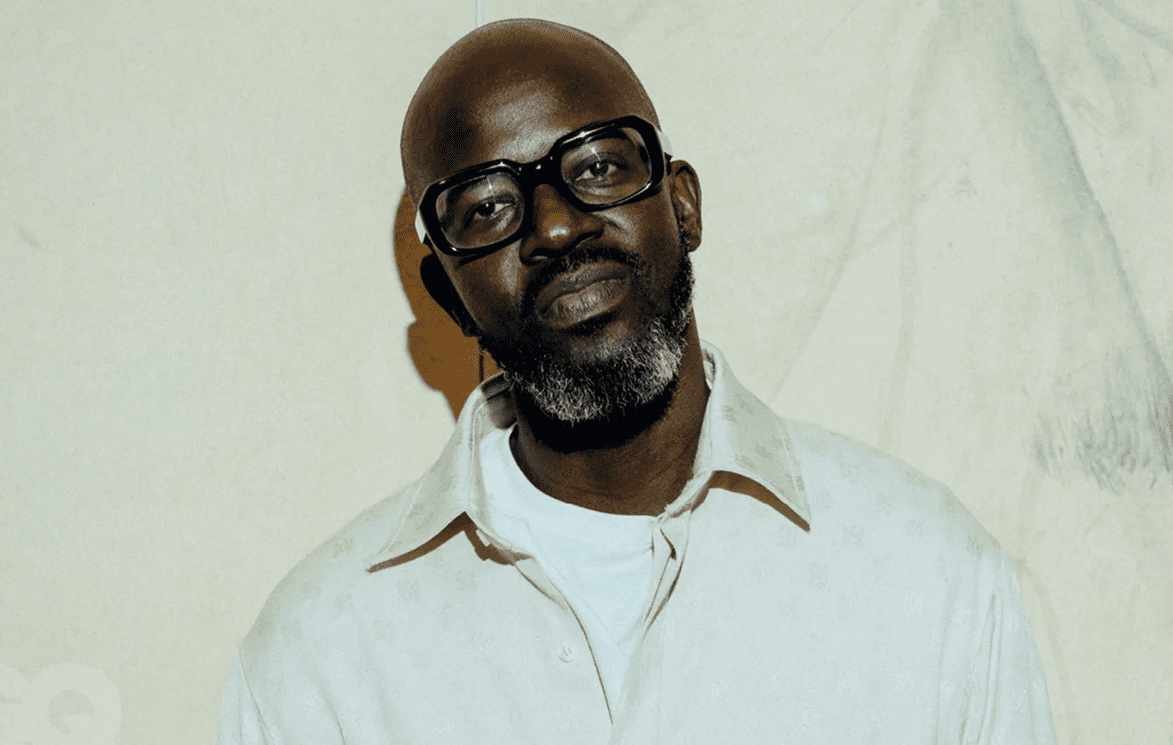
There are performances that entertain, and then there are performances that reframe what live electronic music can be. At the historic Arènes de Nîmes, South African producer Black Coffee delivered the latter.
On May 8, 2026, the ancient Roman amphitheatre—already a monument carved into European cultural memory—became something entirely new: a living hybrid of orchestral performance and electronic ritual. In front of a 14,000-strong audience, Black Coffee stepped into a 360-degree stage installation where symphonic arrangements and Afro house production collided in real time.
It was not simply a DJ set elevated by strings. It was a reconfiguration of scale, sound, and history.
Afro House Rewritten Through Orchestral Language
The most striking element of the night was not volume or spectacle, but translation. Black Coffee’s signature Afro house sound—minimal, percussive, emotionally restrained—was reimagined through a full live orchestra, stretching its rhythmic DNA into cinematic dimensions.
Rather than overpowering the electronic core, the orchestral arrangement expanded it. Melodies that usually sit in club systems were allowed to breathe through violins and brass. Percussion patterns echoed off Roman stone that predates the entire concept of recorded music.
In that moment, the distinction between electronic and classical music felt less like a boundary and more like an outdated assumption.
A Venue That Becomes Part of the Performance
Part of what made the night resonate so deeply was the setting itself. The Arènes de Nîmes is not a conventional concert venue—it is an architectural memory of empire, endurance, and public gathering.
Inside its circular stone walls, Black Coffee didn’t just perform to the crowd; he performed with the space. The amphitheatre’s natural acoustics amplified the orchestral layers in a way no modern club system could replicate. Every delay, every echo, every rising string line felt physically shaped by centuries of history.
This was electronic music not in opposition to heritage, but in conversation with it.
The Global Language of Afro House on a Classical Stage
Black Coffee’s ascent has long been tied to the global expansion of Afro house—an evolution of South African club culture that has moved from underground scenes to some of the world’s most prestigious stages. But this performance marked something more specific: a formal entry into orchestral storytelling.
It is one thing for electronic artists to headline festivals. It is another to have their work reinterpreted as a symphonic composition inside one of France’s most iconic historical sites.
In that sense, the Nîmes performance was not just a milestone for Black Coffee’s career. It was a statement about where electronic music now sits within global cultural hierarchies: no longer peripheral, but institutionally adaptable.
The Future of Live Electronic Performance
Across Europe and beyond, orchestral-electronic hybrids are no longer experimental anomalies—they are becoming a recognizable format. Yet few artists carry the cultural weight to make such a format feel essential rather than decorative.
Black Coffee does.
His approach has always relied on restraint, space, and emotional precision rather than maximalism. That sensibility translates naturally into orchestral interpretation, where silence is as important as sound and where dynamics carry narrative weight.
What unfolded in Nîmes felt less like a crossover experiment and more like an inevitable evolution.
Conclusion: When History Becomes an Instrument
In a world where electronic music often chases scale through production complexity, Black Coffee’s orchestral performance in Nîmes offered a different kind of expansion—one rooted in context, heritage, and emotional architecture.
It suggested that the future of live electronic music may not always be louder or bigger, but deeper: more embedded in place, more willing to dissolve genre borders, and more open to time itself as a collaborator.
Inside ancient stone, modern sound found a new way to belong.









Comments are closed.