
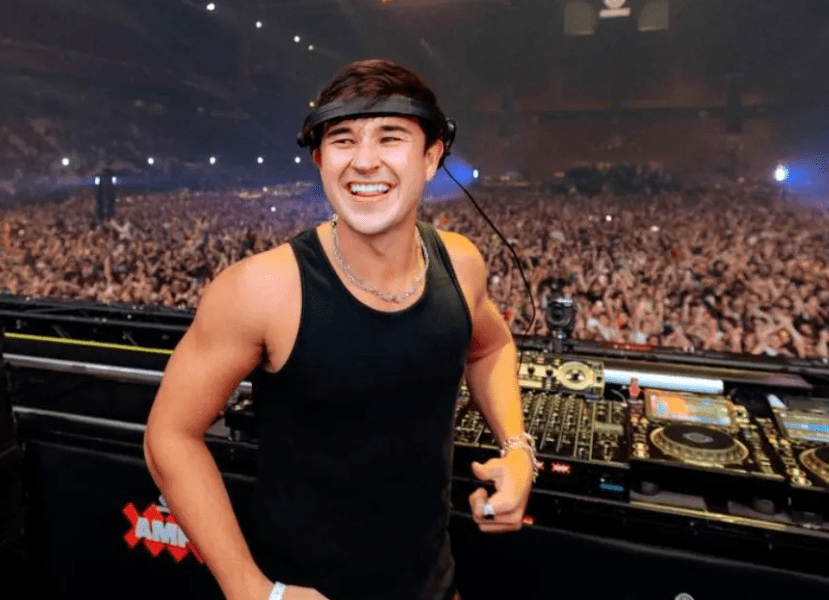
In 2026, the lines between pop culture, sport, and electronic music are no longer blurred—they’re fully intertwined. Nowhere is that more visible than during Miami Race Week, where Formula 1’s high-octane glamour collides with the global dance music circuit. And this year, one unexpected crossover moment stole the spotlight: Jessica Alba stepping into the crowd at a John Summit set—and turning a DJ booth reaction into a viral flashpoint.
It wasn’t staged. That’s exactly why it mattered.
A Moment That Felt Real
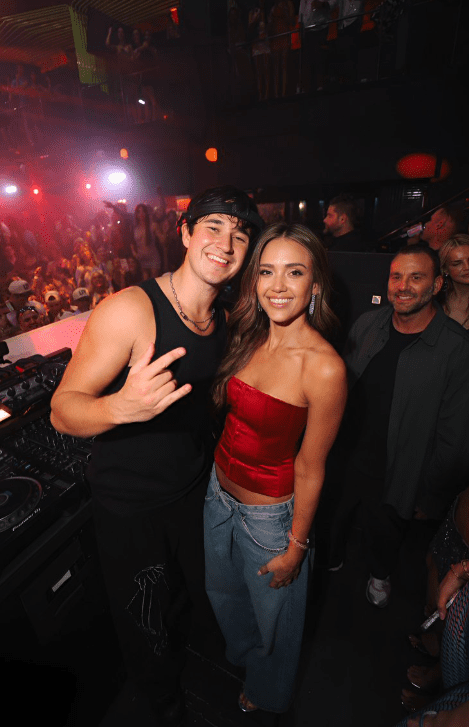
As Summit worked through his set amid the chaos of Miami’s Grand Prix weekend, Alba’s arrival wasn’t announced or teased. She simply appeared—another face in a crowd already filled with high-profile energy. But when the DJ clocked who was standing in front of him, the reaction was immediate and unfiltered.
That split second—surprise, recognition, disbelief—has since circulated across social platforms, precisely because it didn’t feel like content. It felt human.
In an industry often driven by calculated visibility, authenticity still cuts through.
The Expanding Orbit of John Summit
Moments like this don’t happen in isolation. John Summit has spent the past two years expanding far beyond the traditional boundaries of house music, building a profile that comfortably exists at the intersection of club culture and mainstream attention.
From festival mainstages to viral online clips, his rise has been defined not just by output, but by presence. Tracks like “Shiver” with HAYLA have found life across multiple spaces—clubs, social media, even weddings—blurring the line between underground credibility and mass appeal.
Alba showing up isn’t a coincidence. It’s a reflection of that reach.
Miami Race Week: The New Cultural Crossroads
Events like the Miami Grand Prix have become more than sporting fixtures—they’re cultural ecosystems. Over the course of a single weekend, athletes, artists, actors, and influencers converge in a shared space where music plays a central role.
Dance music, in particular, has become the unofficial soundtrack of Race Week. Clubs, pop-ups, and exclusive events transform Miami into a 24-hour circuit of sound and spectacle.
Within that environment, Summit’s sets are not just performances—they are social hubs. Places where audiences and celebrities collapse into the same experience.
Celebrity Culture Meets Club Culture
What makes Alba’s appearance notable isn’t just her presence—it’s the context. This wasn’t a red carpet, a VIP appearance, or a curated partnership. It was a genuine fan moment.
And that distinction matters.
Electronic music has historically operated outside celebrity culture, rooted in underground communities and shared anonymity on the dancefloor. But as the genre continues to globalize, those worlds are increasingly intersecting.
The difference now is intent. When celebrities show up because they want to be there—not because they’re expected to—it reshapes the narrative.
A Viral Snapshot of a Bigger Shift
The clip itself may be short, but what it represents is much larger. It captures a point where dance music has fully entered the mainstream cultural conversation without losing its emotional immediacy.
Summit’s reaction becomes symbolic—not just of meeting a celebrity, but of how far the scene has come. From underground clubs to global events where Hollywood and house music coexist naturally.
The New Face of Dance Music Visibility
As Miami Race Week continues to evolve, so does the role of DJs within it. No longer confined to the booth, they are central figures in a broader cultural exchange—connecting industries, audiences, and moments in real time.
And sometimes, all it takes is one unexpected interaction to capture that shift perfectly.








Comments are closed.