
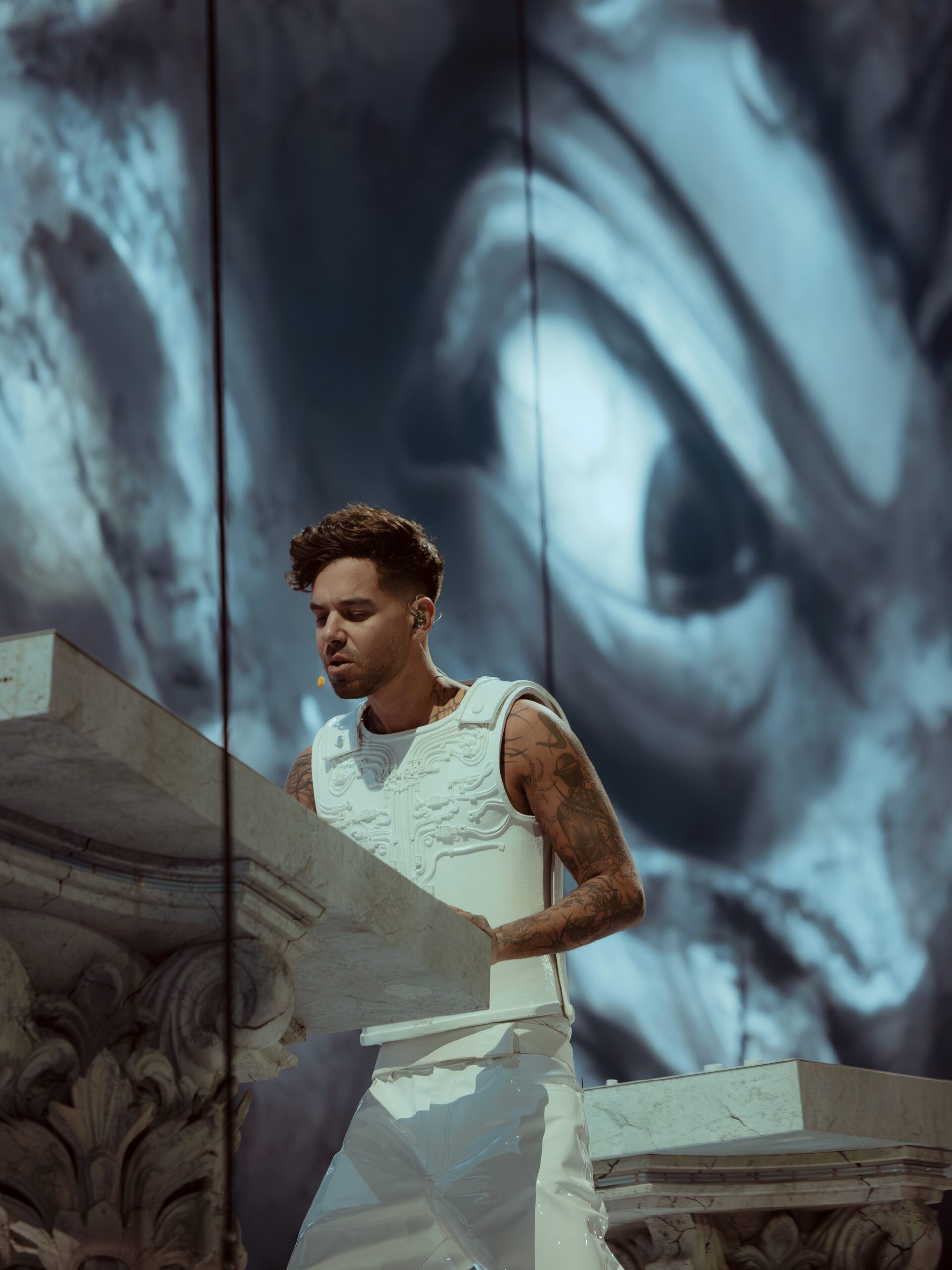
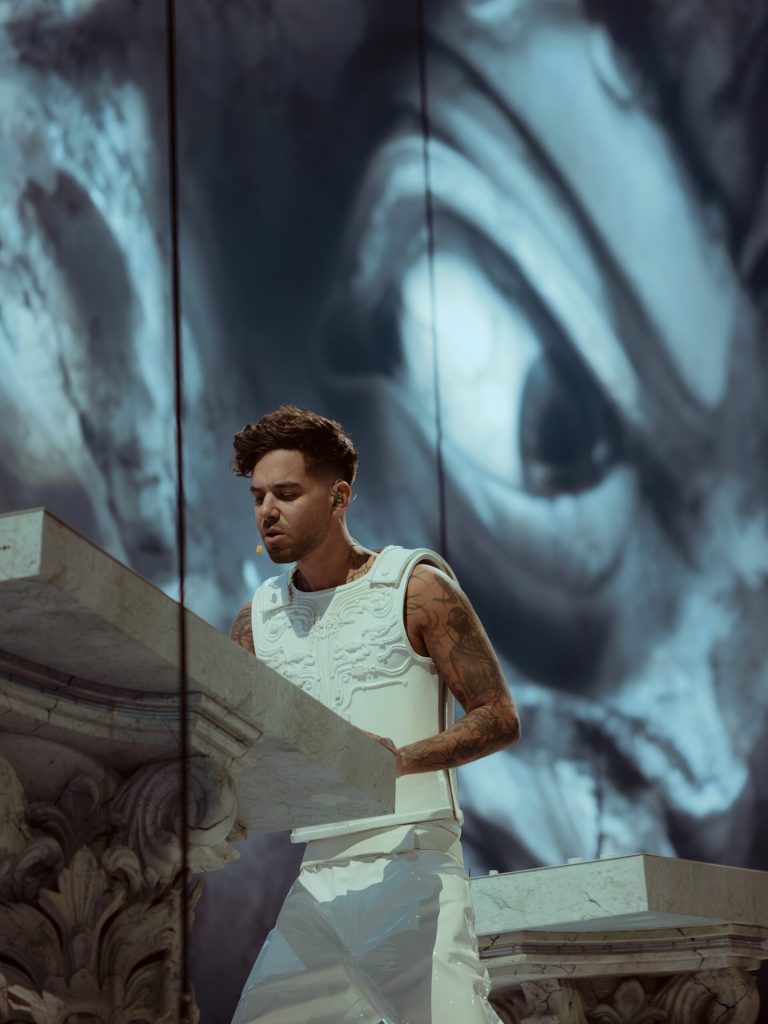
Anyma has addressed the controversy surrounding the cancellation of his upcoming Istanbul performance, rejecting accusations that his visual work promotes satanic or anti-religious imagery and announcing his intention to appeal the decision.
The Italian electronic music artist, whose audiovisual project has become one of the most ambitious productions in contemporary dance music, shared an extensive four-part statement on Instagram following the cancellation.
At the center of his response is a simple argument: the ÆDEN universe is intended as a science-fiction narrative about opposing forces, not a statement against religion or culture.
Anyma Says ÆDEN Is a Story About Darkness and Light
Anyma, whose real name is Matteo Milleri, explained that storytelling has always been central to the project.
He described the Anyma show as a science-fiction journey exploring themes including darkness and light, destruction and creation, fear and hope.
According to the artist, the darker imagery seen throughout the production is deliberately part of that narrative rather than representative of the project’s ultimate message.
“Taking one scene from any film or work and presenting it out of context as the meaning of the entire project is fundamentally misleading,” he explained.
The artist emphasized that the ÆDEN universe has been developed over approximately five years alongside artists, designers and animators, drawing inspiration from art history, mythology and ancient literature.
He also directly rejected the idea that the project is intended to attack or disrespect religion.
Anyma stated that there are no direct representations of religious figures within the show and argued that the imagery should be understood within the wider context of its fictional narrative.
Anyma Accuses Critics of Manipulating His Visuals With AI
One of the strongest elements of Anyma’s statement concerned the circulation of material from his performances online.
The producer alleged that selected darker sequences from the show had been removed from their original context and manipulated using artificial intelligence before being combined with other music and distributed online.
According to Anyma, this created what he described as a false narrative surrounding the project’s intentions.
He also made an important distinction regarding the use of AI in the creation of ÆDEN.
Anyma insisted that his visuals are not AI-generated, while accusing those criticizing the project of using AI to alter his work.
The claim adds another layer to an already complicated debate surrounding artificial intelligence, visual art and misinformation on social media.
As AI-generated and AI-manipulated content becomes increasingly difficult to distinguish from authentic footage, artists are facing a new challenge: maintaining control over how their work is presented once it enters the online ecosystem.
Anyma argues that his work was effectively transformed into something else before being presented to the public.
“Nobody Asked Us to Explain the Work”
The artist also criticized the process that led to the cancellation.
According to his statement, neither his team nor the promoter received what he considered a meaningful opportunity to discuss concerns surrounding the performance before the decision was made.
Anyma said his team would have been willing to provide additional context or discuss potential adaptations to the production if concerns had been raised through dialogue.
Instead, he argued, the show was cancelled without that opportunity.
The distinction is particularly significant given the scale and visual complexity of the ÆDEN project. Unlike a conventional DJ performance, Anyma’s live show combines electronic music with large-scale digital imagery, animation and narrative elements.
Changing or adapting individual visual sequences is therefore potentially different from altering the content of a standard concert.
Anyma Addresses His Turkish Audience Directly
Despite the controversy, Anyma’s statement maintained a conciliatory tone toward Türkiye and its audience.
The producer pointed to previous performances around the world, saying his team has consistently attempted to engage with local cultures and customs.
He said the same approach would have been taken in Türkiye had legitimate concerns been communicated directly.
More importantly, Anyma expressed a desire to return.
He thanked fans who had purchased tickets and those who had already made travel plans around the Istanbul performance, acknowledging the disappointment caused by the cancellation.
He also said that communication channels remain open with the relevant authorities and reiterated his willingness to explain the artistic context behind the production.
A Larger Debate About Art, Context and Social Media
The controversy surrounding Anyma’s Istanbul performance extends beyond a single cancelled show.
It touches on a broader question facing artists working with increasingly elaborate visual storytelling: who controls the meaning of an artwork once individual images are separated from their original context?
Dark imagery has long been part of music, cinema, fashion and visual art. Mythological references, depictions of death, dystopian environments and representations of conflict can serve very different purposes depending on the wider narrative surrounding them.
For Anyma, that narrative is fundamental to ÆDEN.
His argument is that individual frames cannot accurately represent the meaning of an entire audiovisual world.
At the same time, the controversy demonstrates how quickly visual material can be reinterpreted when detached from its original setting and circulated through social media.
“I Hope We Can Come Back and Finish the Story”
Anyma concluded his statement on a distinctly personal note.
Signing the final message with his real name, Matteo, he expressed hope that he and his audience would eventually be able to return to Istanbul and complete the experience together.
The response provides his clearest explanation yet of the circumstances surrounding the cancellation and makes his position unmistakable: he rejects the religious and political interpretations being attached to his work and intends to challenge the decision.
Whether the appeal will ultimately succeed remains uncertain.
For now, the Istanbul cancellation has opened a much larger conversation about artistic freedom, cultural sensitivity, AI manipulation and the increasingly complicated relationship between visual art and social media.
And for Anyma, the story of ÆDEN is clearly not finished yet.






Comments are closed.